
Mind Warfare-A peek on MKUltra
Posted on May 3, 2025 • 5 minutes • 960 words
Stories shape our world. From ancient myths whispered around fires to the code and algorithms humming in our pockets, narratives are the heartbeat of understanding—whether in music, science, or the hidden experiments of history. Just as every drop of rain contributes to the rhythmic flow of a river, every secret project leaves echoes in our collective consciousness. Today, let us explore how your thoughts are your biggest weapon that are targeted in “brain warfare,” and see how the Cold War’s MKUltra program composed its own dark symphony of mind control.
Imagine the world in the 1950s as a vast drumhead, stretched tight between two superpowers. Each nuclear test, each spy exchange, each propaganda broadcast—these were percussion strikes in a high-stakes concerto. Every instrument trying its best to compose its tune. The whispers of Soviets, Chinese, and North Koreans perfecting mind-control techniques after the Korean War resonated in base. Those rumors were the first taps of a growing rhythm of fear—and the CIA rushed to match that beat.
In 1953, Project MKUltra began as an attempt to find a “truth serum”—a single note that would unlock secrets in any subject. But like a percussionist discovering new rhythms, the CIA soon branched into far more complex patterns: sensory deprivation, hypnosis, tape-looped “psychic driving,” massive electroshocks, and chemical cocktails designed to induce euphoria, amnesia, or utter confusion. The aim was to compose a melody of compliance.
The idea is a soothing note and the goal was to fill the test subjects with euphoria. In this state, maybe an ideological suggestion is more effective. Many different drugs and cocktails were used to get the subject to this stage. LSD (lysergic acid diethylamide) is the most prominent of them. As its inventor and first user recalls, “.. I perceived an uninterrupted stream of fantastic pictures, extraordinary shapes with intense, kaleidoscopic play of colors..”. Along with the wild-card drug, calming steady cello-like sedatives—Barbiturates and Benzodiazepines, piccolo’s thrill-like amphetamines, waving flute-like hallucinogen Psilocybin, and a rumored truth-serum Scopolamine were part of the studies. The CIA was very interested to see which raga hits the best and what compositions can be used for interrogations. These notes were tested in improvisational sessions on unwitting subjects, each experiment an attempt to find the perfect chord of control.
If you think about it, although the bass is shaky, the idea is not entirely baseless. Listening to a patriotic or war song makes someone more patriotic, and a sad heart-break song also induces sadness. When combined with good lyrics, it tends to form a perspective over time. Writings, movies, and songs change opinions by striking the chord of emotion more than logic. When you multiply the emotion by several times, the chance of subscribing to a different propaganda seems not far-fetched. But how successful was this? Looking at some examples can help us see if there is any truth to the reasoning of the project.
In 1957, Zal Orlico stepped into Dr. Ewen Cameron’s Allan Memorial Institute seeking relief from depression. Instead, she entered a forced choreography of LSD injections, sixty-day drugged sleeps, relentless tape loops, paralytic curare—and massive electroshock far beyond therapeutic norms. Each treatment was a step in a brutal ballet, designed to erase and rewrite her inner dance. When the music stopped, Orlico’s life lay in ruins. “They took away the rest of my life,” she later said—her narrative forever dissonant. The goal was to “depattern” and “repattern” the brain as she underwent “psychic driving”. While the “repatterning” of her thoughts did not seem to have worked, she and the other victims reported being more prone to anxiety, depression, and psychosis. The flashbacks made the victims “a piece of rag to live”. While the class-action lawsuit filed by some of the victims against the CIA clearly shows the permanent damage done by such trials to the victims, the Unabomber, America’s most intelligent killer (IQ-167), completely denies any effect of MKUltra on his actions.
Long before he became infamous as the “Unabomber,” Ted Kaczynski was a Harvard student in Henry Murray’s three-year psychological stress-test. Students penned essays on their deepest beliefs, only to have those beliefs shredded in “vehement, personally abusive” attacks—a psychological tango of humiliation and resistance. The objective wasn’t to compose new convictions, but to measure how the mind moves under extreme tension. Kaczynski claimed it didn’t change his ideology. Although there is no concrete proof that Kaczynski received drugs, Dr. Murray did conduct research involving LSD at Harvard. Despite the lack of specifics on methodologies used, Ted’s ideology on anti-technology in fact was strengthened, leading him to parcel bombs to scientists who played a key role in improving technology.
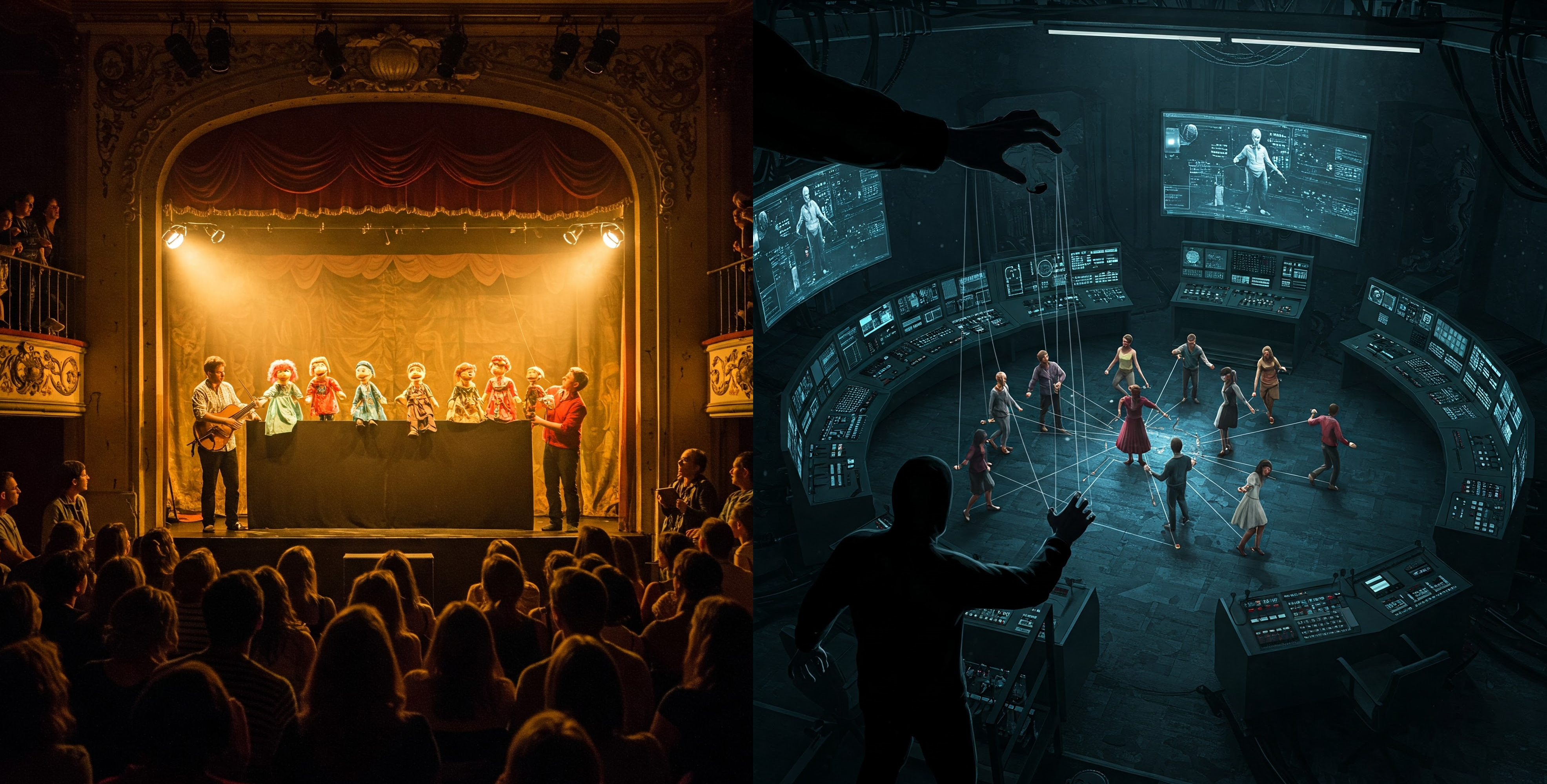
After a lot of evidence and paperwork on Project MKUltra being buried and a few cases whispering the truth, we see that an instantaneous burst of suggestion might not be the most effective way to mind control and can also lead to a cacophony. Space and time can be orchestrated into waves—a slow long-term rhythm may have a chance at mind control. MKUltra sought to resort to quick erasure of previous stories only to reveal that the most potent instrument is the story itself. Today, we need no psychedelic labs to shape belief: a viral tweet, a crafted video, a persuasive article—these are our modern “psychic driving” loops. Nations tune and play narratives for their “betterment,” which itself is defined by a larger narrative told by someone else. This makes us wonder if MKUltra was a past, or is it still going on at a subtle scale. The volume might have come down, but the tune is still being played. As you step back into your world, listen for the rhythms and notes shaping your thoughts. Ask yourself: whose song are you dancing to, and to what end?